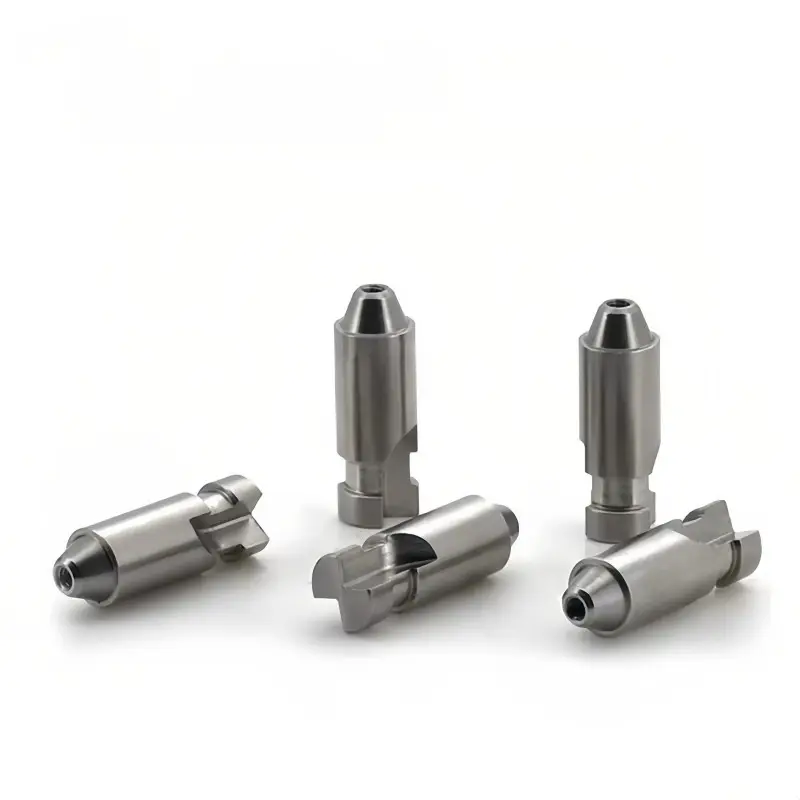
Full arch implant treatment requires components that can support an entire dental arch while maintaining long-term stability, function, and esthetics. Among these components, the multi unit abutment has become a standard solution because it simplifies prosthetic procedures, improves implant alignment, and supports predictable restorative outcomes.
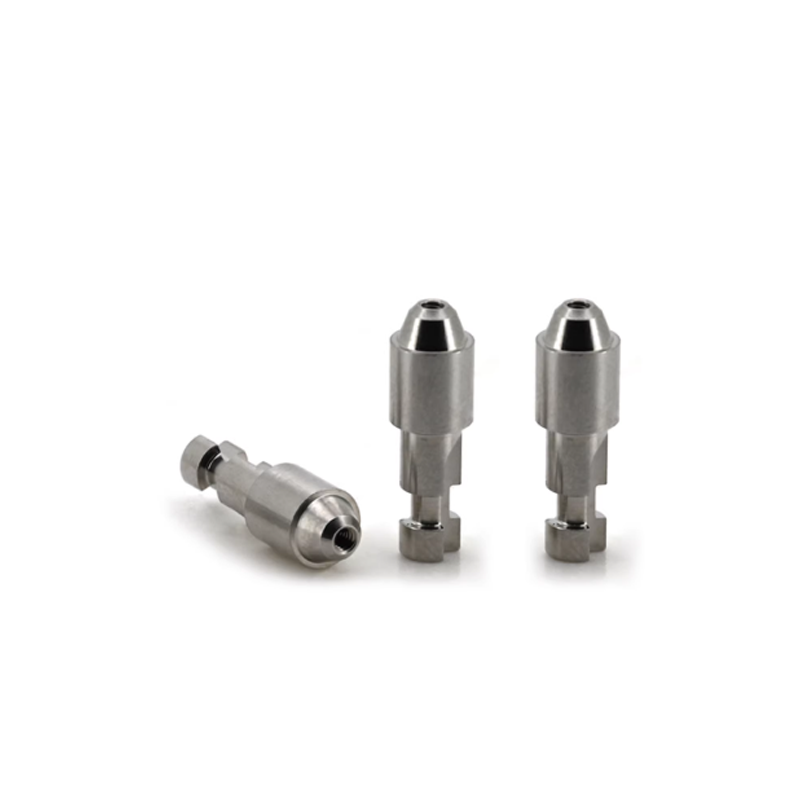
Whether used in an All-on-4 abutment workflow or a larger implant-supported rehabilitation, the multi unit abutment serves as the connection between the implant fixture and the final prosthesis. Its design helps clinicians manage implant positioning challenges while creating a stable platform for a screw-retained prosthesis. Understanding why the multi unit abutment is widely used helps explain many of the principles behind modern full arch restoration protocols.
One of the primary reasons for using a multi unit abutment is implant angulation correction.
In many full arch restoration cases, implants cannot be placed perfectly parallel due to anatomical limitations such as sinus cavities, nerve pathways, or bone volume deficiencies. Posterior implants are often intentionally tilted, particularly in treatments that utilize an All-on-4 abutment approach.
Without implant angulation correction, creating a passive-fitting prosthesis would be difficult. The multi unit abutment is available in straight and angled versions, commonly 17° and 30°, allowing clinicians to compensate for implant divergence and create a more prosthetically favorable alignment.
Effective implant angulation correction improves prosthetic fit and reduces stress on implants, screws, and restorative frameworks. It also simplifies laboratory procedures by providing a more uniform restorative platform.
A full arch restoration must withstand substantial occlusal forces during chewing and functional movements. Uneven load distribution can contribute to screw loosening, framework complications, and implant overload.
The multi unit abutment helps create a standardized prosthetic platform that distributes forces more evenly across the arch. Because the connection is positioned above the soft tissue, clinicians can achieve a more predictable load path from the screw-retained prosthesis to the implant body.
This benefit is especially important in All-on-4 abutment and All-on-6 treatment concepts, where posterior implants are frequently angled to maximize available bone and reduce the need for grafting procedures.
One of the greatest advantages of the multi unit abutment is its ability to support a screw-retained prosthesis.
A screw-retained prosthesis allows clinicians to remove and replace the restoration when maintenance, repair, or professional cleaning is required. In a full arch restoration, retrievability is particularly valuable because long-term serviceability is a major consideration.
The multi unit abutment positions the restorative connection at a more accessible level, allowing screw channels to emerge in functional locations. This makes a screw-retained prosthesis practical even when implants are angled.
Compared with cement-retained alternatives, a screw-retained prosthesis offers several advantages:
These benefits explain why the combination of a multi unit abutment and screw-retained prosthesis has become the preferred approach for many clinicians.
The multi unit abutment also improves efficiency throughout the restorative process.
Once placed, the multi unit abutment becomes the primary restorative platform. Subsequent procedures such as impressions, digital scans, temporary prostheses, and final restorations are completed at the abutment level rather than directly at the implant.
For laboratories, standardized multi unit abutment connections simplify CAD/CAM design and manufacturing. Consistent connection geometry improves accuracy and reduces the risk of fabrication errors.
In high-volume full arch restoration practices, this workflow efficiency can significantly improve treatment predictability and reduce chairside adjustments.
Immediate loading has become increasingly popular in full arch restoration treatment.
Patients often prefer receiving a fixed restoration on the same day as implant surgery rather than waiting months for healing. In these protocols, the multi unit abutment provides a stable connection for temporary prostheses.
Because the temporary restoration connects to the multi unit abutment rather than directly to the implant, adjustments can be performed without disturbing the healing implant interface. This separation helps protect osseointegration during the critical healing phase.
Many immediate-loading systems built around the All-on-4 abutment concept rely heavily on the stability provided by the multi unit abutment.
Another advantage of the multi unit abutment is the smooth transition from temporary to definitive restoration.
Because the abutments remain in place during healing, the restorative reference platform does not change. The same connection used for the provisional restoration becomes the foundation for the final screw-retained prosthesis.
This continuity reduces the likelihood of dimensional inaccuracies and simplifies laboratory procedures. It also contributes to more predictable restorative outcomes in full arch restoration cases.
The multi unit abutment contributes to peri-implant tissue health through its transmucosal design.
Instead of placing the restorative connection at bone level, the multi unit abutment elevates the interface above the soft tissue. This positioning allows clinicians to develop favorable tissue contours while maintaining easier access for hygiene procedures.
A properly designed emergence profile improves patient cleaning access and reduces plaque accumulation around restorative components.
When combined with a screw-retained prosthesis, the multi unit abutment also allows clinicians to periodically remove the restoration for professional maintenance and tissue evaluation.
The elevated restorative platform created by the multi unit abutment helps reduce disturbance to the implant connection during restorative procedures.
Once the abutment is installed, clinicians rarely need to manipulate the implant fixture itself. This minimizes disruption of surrounding tissues and supports long-term biological stability.
For many practitioners, this is another reason the multi unit abutment has become a key component in modern full arch restoration workflows.
Long-term maintenance is an important consideration for every full arch restoration.
Even well-designed restorations may eventually require screw replacement, prosthetic repairs, relining, or component adjustments. A multi unit abutment system simplifies these procedures by creating a standardized restorative interface.
Because a screw-retained prosthesis can be removed without damaging the restoration, maintenance procedures are generally faster and less invasive.
This retrievability is particularly valuable in complex cases involving multiple implants.
Modern digital dentistry integrates seamlessly with the multi unit abutment.
Most major implant systems offer compatible scan bodies, digital libraries, and CAD/CAM workflows designed specifically for multi unit abutment restorations. This compatibility improves accuracy while reducing laboratory complexity.
As digital treatment planning becomes increasingly common, the multi unit abutment continues to play an important role in both traditional and fully digital full arch restoration protocols.
The primary purpose of a multi unit abutment is to create a standardized restorative platform above the soft tissue. It facilitates implant angulation correction, supports a screw-retained prosthesis, and simplifies restorative procedures in full arch restoration cases.
Tilted implants often create alignment challenges. The multi unit abutment provides implant angulation correction by compensating for implant divergence and creating a more parallel restorative platform. This is particularly important in All-on-4 abutment treatment concepts.
A screw-retained prosthesis offers retrievability, easier maintenance, simplified repairs, and reduced risk of cement-related complications. These advantages make it the preferred restorative option in many full arch restoration treatments.
The multi unit abutment provides a stable connection point for temporary restorations placed immediately after surgery. It allows adjustments to the provisional restoration without disturbing the healing implant interface and creates a seamless transition to the final screw-retained prosthesis.
 EN
EN