Modern dentistry has undergone a profound transformation in how practitioners approach tooth replacement and restoration. One of the most significant developments is the widespread adoption of custom solutions tailored to individual patient needs. At the heart of this evolution lies the dental abutment, a critical component that bridges the gap between the implant fixture and the final restoration. Understanding why custom dental abutment solutions have become so popular requires examining the clinical, technical, and patient-outcome factors that drive this trend in contemporary dental practice.
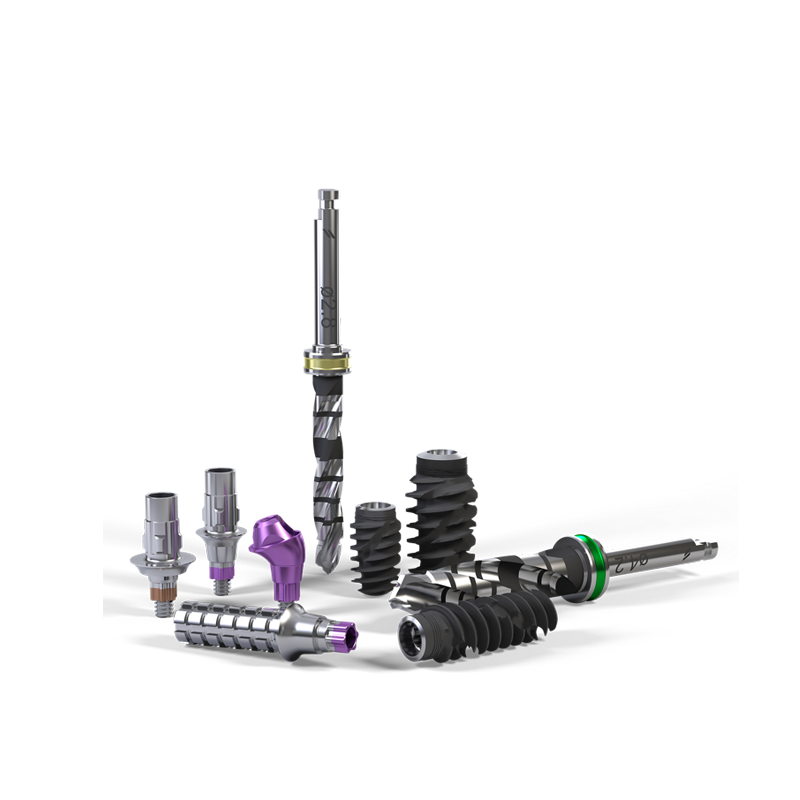
The popularity of custom dental implant restoration options reflects a broader shift toward precision and individualization in restorative dentistry. Rather than relying solely on prefabricated components that may not perfectly match patient anatomy, clinicians now recognize the value of customized solutions that enhance both esthetic outcomes and long-term stability. This approach has fundamentally changed how dental teams plan, execute, and maintain implant-supported restorations.
Custom dental abutment solutions enable clinicians to create restorations that seamlessly integrate with natural tooth structure and surrounding soft tissues. When abutment selection for implant placement considers individual gingival contours, bone anatomy, and adjacent tooth positioning, the final restoration appears genuinely natural rather than visibly artificial. This level of precision is particularly important in the esthetic zone where even minor discrepancies become clinically evident. Patients benefit from restorations that restore not only function but also their natural smile appearance, significantly improving satisfaction and quality of life.
The biomechanical relationship between the implant fixture and the abutment directly influences restoration longevity. Proper abutment screw torque specification ensures optimal load distribution and prevents micromotion at the implant-abutment interface, a primary source of mechanical failure and peri-implant bone loss. Custom abutments designed specifically for each patient's bone quality, implant angle, and occlusal demands provide superior stress management compared to one-size-fits-all alternatives. This attention to detail extends restoration lifespan and reduces the need for costly repairs or replacement procedures.
Modern dental implant restoration demands careful material selection to ensure biocompatibility, durability, and esthetic harmony. Custom abutments can be fabricated from titanium, zirconia, or hybrid materials depending on specific clinical requirements. Titanium offers superior strength and osseointegration support but may show through thin gingival tissue. Zirconia provides excellent esthetics and tissue compatibility, making it ideal for demanding anterior cases. The decision regarding material selection for implant placement requires understanding each patient's unique combination of bone quality, soft tissue thickness, and functional demands. Custom solutions allow clinicians to match material properties precisely to clinical circumstances.
The fit between implant fixture and abutment components represents a critical control point for overall restoration success. Custom dental abutment design ensures minimal marginal gaps, reducing areas where bacterial contamination and peri-implant inflammation can develop. Proper abutment screw torque specification becomes achievable only when component geometry is optimized for each specific implant system and patient anatomy. Laboratory technicians working with detailed clinical information can fabricate abutments with micron-level precision, enhancing the reliability of dental implant restoration over years of service.
Every patient presents unique anatomical, physiological, and esthetic considerations that influence restoration design and longevity. Abutment selection for implant placement must account for bone density and resorption patterns, gingival biotype characteristics, occlusal forces, and esthetic expectations. Custom solutions empower clinicians to address each factor comprehensively rather than forcing patients into standardized templates. This individualized approach strengthens the clinical relationship and demonstrates commitment to optimal outcomes, enhancing patient trust and referral patterns within practice communities.
Complications arising from poorly adapted components generate significant costs and patient dissatisfaction. Custom dental implant restoration protocols minimize these issues by ensuring components work harmoniously from implant placement through years of functional service. When abutment screw torque specification is optimized for the specific clinical situation, mechanical loosening and associated complications decrease dramatically. Investment in customized solutions during initial restoration fabrication proves more economical than managing complications from standard components adapted to unsuitable clinical situations.
Custom dental abutment solutions are engineered for the specific anatomy, bone quality, and esthetic demands of each individual patient. Prefabricated abutments represent compromises that rarely match unique patient conditions perfectly. Custom abutments provide optimized component fit, precise abutment screw torque specification, and esthetic integration impossible with standard components, resulting in superior clinical outcomes and longevity for dental implant restoration.
Abutment selection for implant placement is fundamental to determining both initial restoration quality and decades-long service life. Selecting inappropriate components, even if acceptable initially, creates stress concentration points and accelerates component wear. Custom solutions designed through careful analysis of bone morphology, implant positioning, and functional demands ensure stress distribution remains physiologic, preserving both implant stability and supporting bone architecture.
Abutment screw torque specification must be precisely calibrated to secure components without over-stressing materials or under-tightening them into mechanical looseness. Custom abutments engineered for their specific implant system and patient anatomy make achieving optimal torque specifications straightforward and reliable, preventing complications like screw loosening, microgap formation, and the peri-implant inflammation that follows. This precise control is simply not possible with mismatched standard components.
 EN