In regenerative dentistry, a dental membrane plays a critical role in tissue healing and successful implant dentistry outcomes. Whether used for bone grafting, socket preservation, or guided bone regeneration, a dental membrane creates a protected environment that encourages bone formation while preventing soft tissue from invading the defect site. This controlled healing process improves predictability, enhances regeneration, and increases the likelihood of long-term implant success.
Understanding how a dental membrane contributes to tissue healing helps clinicians optimize treatment planning and select the most appropriate regenerative materials. Modern membrane technologies, especially the mineralized collagen membrane, offer both barrier protection and biological support, making them indispensable in contemporary implant dentistry.
The primary purpose of a dental membrane is to separate soft tissue from the underlying graft or bone defect during guided bone regeneration. During early tissue healing, epithelial cells and fibroblasts migrate rapidly and can occupy the defect before bone-forming cells arrive. Without a dental membrane, soft tissue often fills the site, limiting new bone formation.
By acting as a selective barrier, a dental membrane preserves space for osteoblasts and progenitor cells. This environment supports guided bone regeneration and allows natural healing mechanisms to focus on bone development rather than fibrous tissue repair.
The protected space beneath the dental membrane also retains growth factors and biological signals that are essential for tissue healing. As a result, clinicians frequently observe greater bone density and more predictable regenerative outcomes.
Successful guided bone regeneration requires more than cellular exclusion. A dental membrane must also maintain sufficient space for new bone to form.
Advanced dental membrane designs resist collapse from overlying soft tissue pressure. This space-preserving function allows angiogenesis and tissue healing to occur in a stable environment. Blood vessels can develop, nutrients can reach the grafted area, and osteogenic cells can proliferate effectively.
In larger defects, the combination of graft material and a dental membrane creates the structural conditions necessary for predictable bone regeneration. This is particularly important in implant dentistry cases involving ridge augmentation or severe bone loss.
One of the most significant developments in guided bone regeneration is the introduction of the mineralized collagen membrane. Unlike synthetic barriers, a mineralized collagen membrane closely resembles the composition of natural bone and extracellular matrix.
Because collagen is naturally present in human tissue, the body readily accepts a mineralized collagen membrane. This high level of biocompatibility supports tissue healing while minimizing inflammatory reactions.
For implant dentistry procedures, reduced inflammation often translates into improved patient comfort, faster recovery, and more predictable regenerative outcomes.
A mineralized collagen membrane offers more than barrier protection. The incorporation of calcium phosphate minerals, such as hydroxyapatite, provides osteoconductive properties that actively support bone formation.
The mineralized collagen membrane serves as a scaffold where osteoblasts can attach, migrate, and proliferate. This dual function makes the mineralized collagen membrane especially valuable in complex guided bone regeneration procedures where both containment and active regenerative support are required.
Clinical studies consistently show that mineralized collagen membrane applications contribute to improved bone quality and enhanced tissue healing compared with conventional membrane materials.
An effective dental membrane must remain functional throughout the critical healing period and then gradually disappear as regeneration progresses.
Modern mineralized collagen membrane products are engineered to provide barrier function for several weeks while tissue healing and guided bone regeneration occur. After fulfilling their purpose, they slowly resorb through natural enzymatic processes.
This eliminates the need for a second surgery to remove the membrane, reducing patient discomfort and lowering treatment costs in implant dentistry.
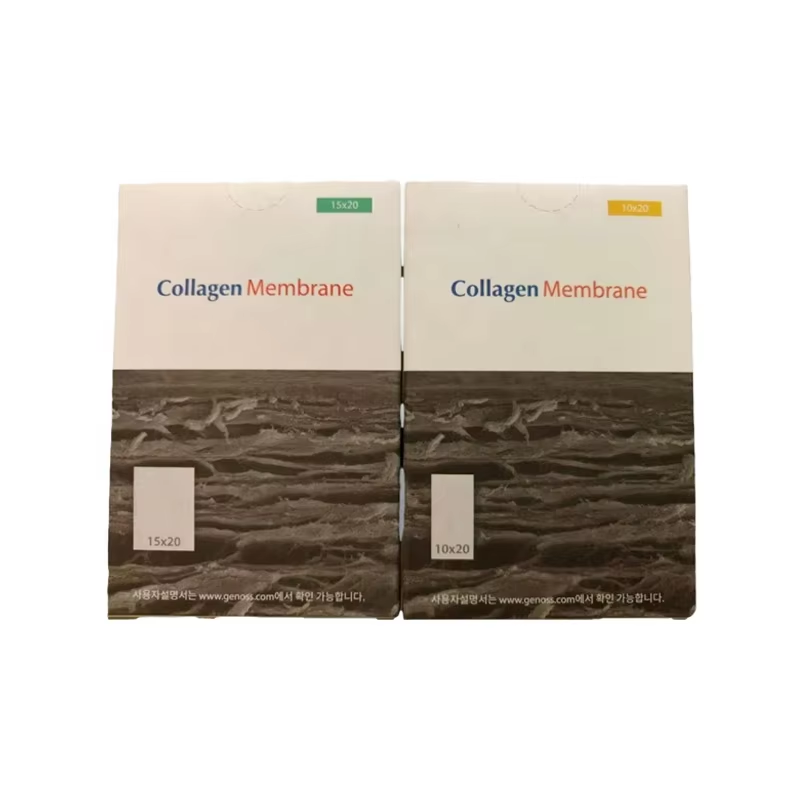
In guided bone regeneration, graft particles can become displaced by tongue movement, chewing forces, or soft tissue pressure. A dental membrane stabilizes the graft and helps maintain the intended augmentation volume.
By preventing graft migration, the dental membrane ensures close contact between graft particles and native bone. This relationship is critical for tissue healing and successful bone regeneration.
For procedures such as ridge augmentation, sinus elevation, and socket preservation, graft stability provided by a dental membrane directly influences clinical outcomes.
A dental membrane also contributes to tissue healing by protecting the surgical site from contamination and mechanical disruption.
When combined with proper flap management and primary closure, a dental membrane creates a sealed regenerative environment. This reduces the risk of infection, wound dehiscence, and graft exposure.
Collagen-based dental membrane products additionally support clot stabilization, which is essential during the earliest stages of tissue healing. A stable blood clot provides the biological foundation for successful guided bone regeneration.
Occasional membrane exposure can occur despite careful surgical technique. Compared with non-resorbable alternatives, absorbable dental membrane materials generally perform better when exposure happens.
Many collagen-based membranes continue supporting tissue healing even after limited exposure. This characteristic improves treatment predictability and reduces the likelihood of regenerative failure in implant dentistry procedures.
The ultimate goal of guided bone regeneration is to create sufficient bone for implant placement. A dental membrane helps achieve this by maintaining regenerative space and supporting tissue healing throughout the process.
Without adequate bone volume, implants may require compromised positioning, potentially affecting esthetics and function. By supporting predictable regeneration, a dental membrane allows clinicians to place implants in ideal restorative positions.
As a result, guided bone regeneration has significantly expanded treatment options within implant dentistry.
Histological research demonstrates that bone regenerated beneath a dental membrane can closely resemble native bone. This regenerated tissue provides excellent support for implant osseointegration.
Because implant stability depends on both bone quantity and bone quality, successful guided bone regeneration directly contributes to long-term implant success.
For many clinicians, the dental membrane has become a cornerstone material in modern implant dentistry protocols.
The benefits of a dental membrane extend beyond bone regeneration. Adequate bone support contributes to healthier soft tissue contours around implants.
Certain mineralized collagen membrane products also encourage soft tissue healing by providing a matrix that supports cellular attachment and tissue maturation. This can improve esthetic outcomes and help maintain peri-implant health over time.
A dental membrane is one of the most important tools in modern implant dentistry and guided bone regeneration. By creating a protected healing environment, maintaining regenerative space, stabilizing graft materials, and supporting tissue healing, it significantly improves clinical outcomes.
The mineralized collagen membrane further enhances these benefits through exceptional biocompatibility, osteoconductive properties, and controlled resorption. As guided bone regeneration continues to evolve, the dental membrane remains central to achieving predictable regeneration, successful implant placement, and long-term patient satisfaction.
A dental membrane acts as a barrier during guided bone regeneration, preventing soft tissue from entering the defect while allowing bone-forming cells to support tissue healing and regeneration.
Most absorbable dental membrane products maintain barrier function for approximately four to eight weeks, covering the critical tissue healing phase before gradually resorbing.
A mineralized collagen membrane combines barrier protection with osteoconductive support, helping promote tissue healing and new bone formation during guided bone regeneration.
Not every grafting procedure requires a dental membrane, but it is highly recommended whenever guided bone regeneration, graft stabilization, or significant tissue healing support is needed.
A dental membrane promotes predictable guided bone regeneration, preserves bone volume, enhances tissue healing, and creates conditions that support long-term implant stability and success.

 EN
EN