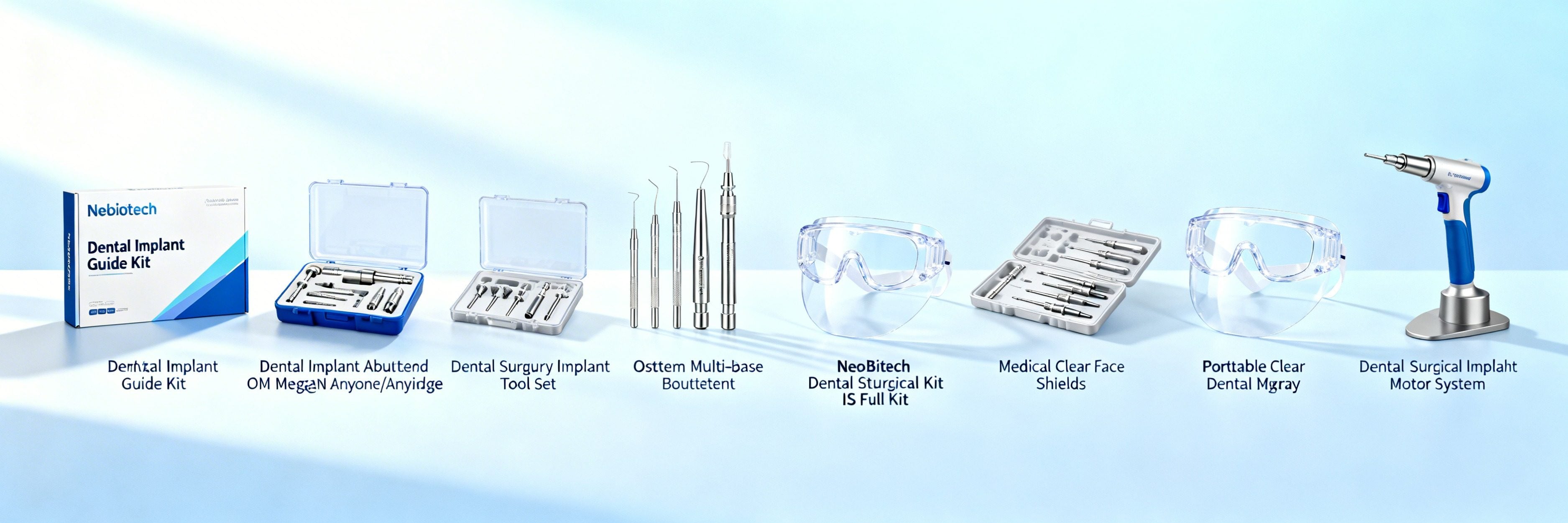
In any clinical setting, the quality of dental instruments directly shapes how well practitioners can perform day after day. When dental instruments are reliable, dentists can focus entirely on the patient rather than worrying about equipment failure or inconsistent performance. Consistency in daily treatment is not an accident — it is built on a foundation of dependable tools used correctly every single time.
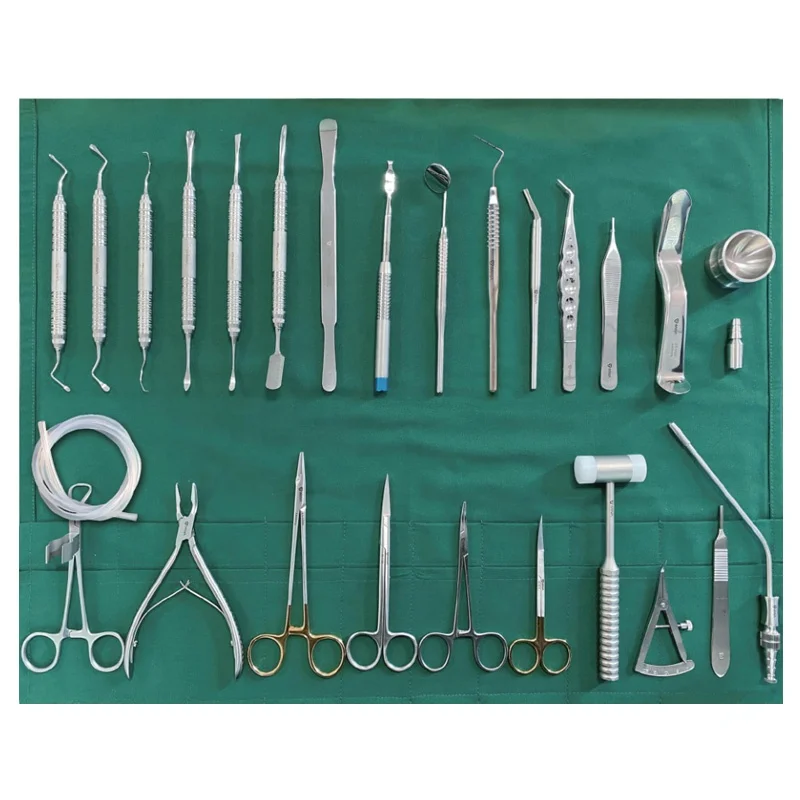
Dental instruments span a wide range of tools, from basic explorers and mirrors to precision implant surgical kits. Every category of dental instruments serves a distinct clinical purpose, and any weak link in that chain can disrupt the flow of treatment. Understanding why reliable dental instruments matter — and how they contribute to measurable consistency — helps clinics make smarter procurement decisions and deliver higher-quality care over the long term.
The foundation of reliable dental instruments lies in material selection and manufacturing precision. High-grade stainless steel dental instruments resist corrosion, maintain their edge through repeated sterilization cycles, and tolerate the physical demands of daily clinical use. When dental instruments are manufactured to tight tolerances, they fit, function, and feel consistent from one procedure to the next, giving practitioners a stable tactile reference they can trust.
Poorly engineered dental instruments may feel adequate at first but degrade quickly under autoclave conditions. Micro-fractures, surface pitting, and joint loosening in substandard dental instruments all introduce variability that undermines treatment consistency. Clinics that invest in precision-engineered dental instruments protect both their workflow and their patients by reducing the risk of mid-procedure complications caused by tool failure.
Reliable dental instruments are also designed with ergonomics in mind. Balanced weight distribution and textured grips allow clinicians to maintain precise control even during extended procedures. When dental instruments feel natural and predictable in hand, practitioners can replicate the same movements and pressures across different patients, which directly translates to more consistent clinical outcomes.
Inconsistent grip design or imbalanced dental instruments force clinicians to compensate physically, which introduces fatigue and subtle technique variations over the course of a busy day. Standardizing the ergonomic profile of dental instruments used across a practice helps every team member operate at a consistent performance level regardless of how many procedures they have already completed.
One of the most practical benefits of reliable dental instruments is the reduction of workflow interruptions. When dental instruments function as expected — cutting cleanly, fitting accurately, and holding their form — procedures move forward without unplanned pauses to switch tools or repeat steps. Reduced chair time benefits both the patient experience and the clinic's scheduling efficiency.
For implant procedures in particular, a complete and well-matched set of dental instruments eliminates the need for mid-procedure improvisation. A properly configured implant surgical kit contains dental instruments that are sized, sequenced, and matched to work together. This systematic approach means each dental instrument in the kit reinforces the consistency of the one that came before it, creating a predictable procedural rhythm that experienced practitioners rely on.
Daily treatment consistency also depends on how well dental instruments survive the sterilization process. Reliable dental instruments are manufactured to tolerate repeated autoclave cycles without warping, discoloring, or losing functional precision. Clinics that use dental instruments not rated for high-cycle sterilization will inevitably see performance degradation, which introduces unpredictability into their standard protocols.
Maintaining a consistent inventory of functional dental instruments requires selecting tools built for clinical longevity. When dental instruments maintain their dimensional accuracy and surface integrity across hundreds of sterilization cycles, the clinical team can operate each day knowing their tools will perform exactly as expected. This reliability removes a significant source of day-to-day variability from the treatment environment.
Consistency in treatment outcomes is easier to achieve when every clinician in a practice uses the same dental instruments in the same configuration. Standardizing dental instruments across treatment rooms and team members eliminates the performance gap that often exists when practitioners use different tool brands or configurations for the same procedure. When dental instruments are uniform, training is more straightforward, quality control is more reliable, and patient outcomes become more predictable.
Standardized dental instruments also simplify inventory management. When a practice commits to a defined set of dental instruments, reordering, sterilization scheduling, and quality checks all become more efficient. This operational clarity supports a clinical environment where consistency is the norm rather than the exception, and every dental instrument earns its place based on proven performance rather than habit or convenience.
Different procedures demand different dental instruments, and matching the right tools to the right tasks is essential for maintaining consistency. Implant surgeries require dental instruments with precise fit and controlled torque characteristics. Restorative procedures demand dental instruments that allow fine tactile feedback. Selecting dental instruments that are purpose-built for specific clinical scenarios ensures that the tools themselves never become the limiting factor in achieving consistent results.
Dental instruments selected without clear procedural criteria often create gaps in clinical capability. A comprehensive approach to dental instrument procurement — one that considers material quality, procedure fit, sterilization durability, and ergonomic design together — is the most direct path to daily treatment consistency. Every dental instrument in a clinical setting should be chosen deliberately, maintained properly, and replaced at the right interval to sustain the standard of care the practice has committed to delivering.
Dental instruments should be inspected after every sterilization cycle and replaced when signs of wear, corrosion, or dimensional change appear. High-use dental instruments in busy practices typically need replacement more frequently than those used in lower-volume settings. Establishing a routine inspection protocol ensures dental instruments are always performing at the standard required for consistent treatment.
High-grade stainless steel is the most widely accepted material for dental instruments intended for clinical use. It combines corrosion resistance with mechanical durability, making dental instruments suitable for repeated sterilization and demanding procedural conditions. Some specialized dental instruments also use titanium alloys where reduced weight or enhanced biocompatibility is a priority.
Yes, standardizing dental instruments across a clinical team significantly reduces performance variability. When all practitioners use the same dental instruments in the same procedural sequence, the learning curve for new staff is shorter, quality audits are more meaningful, and consistency in patient care becomes measurable. A unified dental instrument standard supports both individual performance and overall practice quality.

 EN
EN