Posture-related injuries are among the most persistent occupational hazards in dentistry. Dentists routinely spend hours leaning over patients, craning their necks, and squinting to see fine details inside the oral cavity. This physical strain accumulates over years and can lead to chronic back pain, neck disorders, and even career-ending musculoskeletal conditions. dental loupes have emerged as one of the most effective tools for addressing this problem by allowing clinicians to maintain a healthier, more neutral body position while working.
The connection between dental loupes and posture health is not incidental. It is rooted in ergonomic science. When a dentist wears dental loupes with the correct declination angle and working distance, the body naturally aligns in a way that reduces the need to hunch or tilt the head forward. Understanding exactly how dental loupes achieve this postural benefit helps clinicians make smarter choices about their equipment and their long-term health.
Without dental loupes, a dentist must rely entirely on naked-eye vision to examine and treat the oral cavity. The structures involved — teeth, gum margins, root canals — are small and poorly lit in most clinical positions. To see clearly, the dentist instinctively leans closer, dropping the head forward and rounding the upper back. This posture compresses the cervical spine and overloads the muscles of the neck and shoulders. Over time, these repeated micro-stresses become the foundation for serious musculoskeletal disorders.
Research within dental ergonomics consistently identifies the head-forward position as the primary driver of occupational injury among dental professionals. When the head moves just a few centimeters in front of the body's center of gravity, the effective load on the cervical spine multiplies significantly. Dental loupes, when correctly fitted, directly counteract this mechanism by placing the magnified visual field at a comfortable and ergonomically sound working distance.
Visual demand is a key concept in understanding dental posture. The harder it is to see something, the more aggressively the body repositions itself to bring the eyes closer to the target. Dental loupes reduce visual demand by magnifying the operative field, which means the clinician no longer needs to compromise body alignment in order to see fine detail. With dental loupes providing clear magnification, the eyes can remain at a safe distance from the work area while still delivering precise visual information to the brain.
The declination angle of dental loupes refers to the downward tilt of the optical barrels relative to the frame. This angle is critical. When dental loupes are configured with the correct declination angle for a given clinician, the eyes look naturally downward through the lenses without requiring the neck to flex forward. A properly set declination angle means the dentist can keep the head in a relatively upright position while still directing gaze toward the patient's mouth. This single design feature is responsible for much of the postural benefit that dental loupes provide.
Dental loupes with insufficient or incorrect declination angles can actually worsen posture by forcing the clinician to tilt the head backward or strain the eyes downward at an unnatural angle. This is why the custom fitting process for dental loupes matters enormously. Generic dental loupes that are not adjusted to the individual user's anatomy may undermine the very ergonomic goals they are supposed to achieve.
Working distance is the fixed focal length of dental loupes — the distance at which the magnified image is sharpest. Dental loupes are available in various working distances, typically ranging from around 340 mm to 500 mm or more. A longer working distance allows the dentist to sit farther from the patient, which in turn permits a more upright trunk posture and reduces the degree of forward spinal flexion. Selecting dental loupes with an appropriate working distance for one's height and preferred seating position is therefore a direct ergonomic decision with lasting physical consequences.
When dental loupes are matched to the clinician's natural sitting height and arm reach, the body can operate within a neutral spine zone. This means the lumbar curve is preserved, the shoulders stay relaxed, and the neck maintains a gentle forward angle rather than a deep flex. Dental loupes essentially create the conditions under which good posture becomes the path of least resistance rather than a conscious effort.
Dentists who adopt dental loupes early in their careers tend to report fewer musculoskeletal complaints over time compared to those who rely solely on unaided vision. The cumulative effect of years of ergonomic positioning with dental loupes is substantial. Reduced cervical strain, lower incidence of shoulder and back pain, and better overall physical resilience are frequently cited advantages. For a profession where physical longevity directly affects earning potential and quality of life, dental loupes represent a sound long-term investment.
Dental loupes also change clinical habits in subtle but meaningful ways. When clinicians are comfortable and properly positioned, they tend to take fewer disruptive breaks, maintain more consistent procedural focus, and experience less fatigue during long appointments. This translates into both better patient outcomes and a more sustainable working rhythm throughout a dentist's career.
There is a reinforcing loop between clear visibility and good posture that dental loupes help establish. When dental loupes provide excellent magnification and illumination — especially when paired with an integrated headlight — the clinician receives a reward for staying in the correct ergonomic position. The image is sharp and bright as long as the head is properly aligned. Any deviation from the correct posture shifts the focal field, providing immediate proprioceptive feedback. In this way, dental loupes actively train the body to maintain better positioning over time.
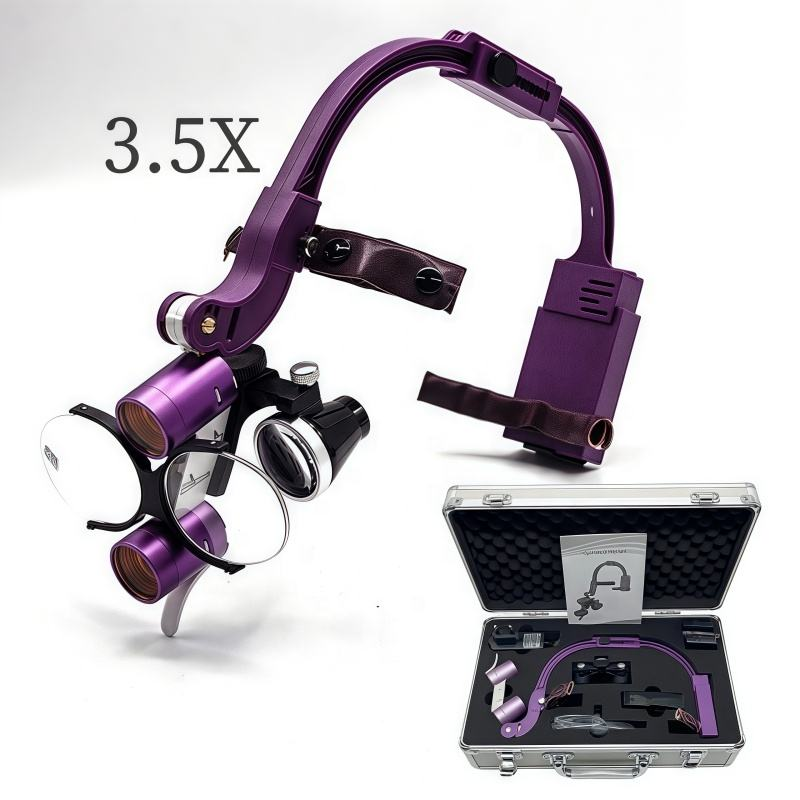
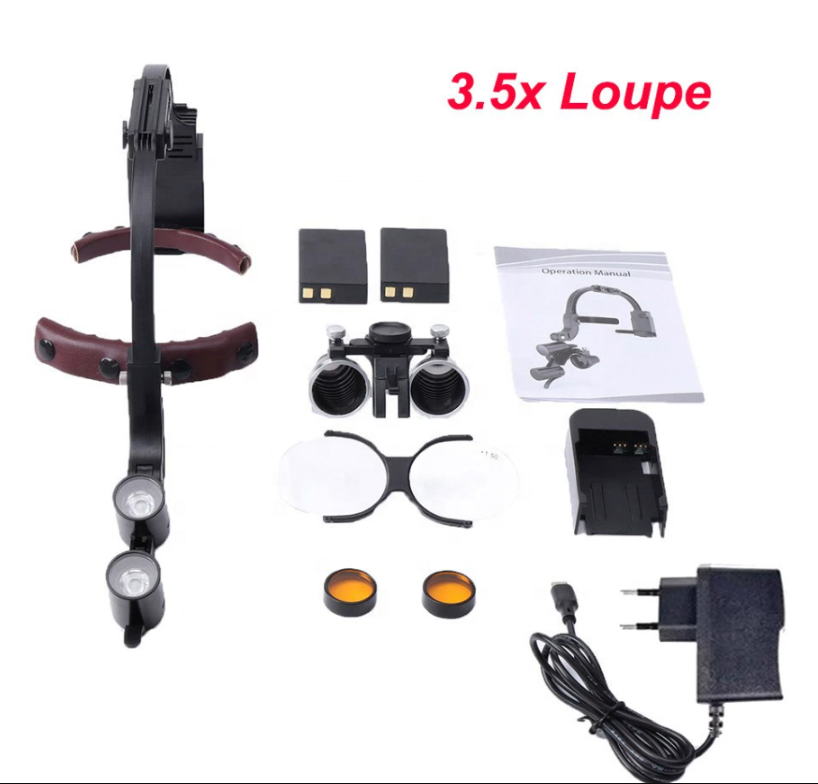
Most dental professionals begin with dental loupes in the 2.5x to 3.5x magnification range. This level provides meaningful visual enhancement and sufficient working distance to support ergonomic positioning without requiring significant adaptation time. Dental loupes at 2.5x are especially well-suited for general dentistry, while 3.5x dental loupes offer a stronger benefit for more detailed procedures.
Dental loupes can help halt further postural deterioration and encourage better positioning habits going forward. However, existing musculoskeletal damage may require additional interventions such as physiotherapy or ergonomic seating adjustments alongside dental loupes. The sooner dental loupes are introduced into practice, the greater the preventive and corrective benefit they are likely to deliver.
No. The ergonomic value of dental loupes depends heavily on the declination angle, working distance, and fit customization. TTL (through-the-lens) dental loupes generally offer better ergonomic alignment than flip-up dental loupes because the optics are permanently set to the user's specific parameters. Dentists investing in dental loupes for posture improvement should prioritize custom-fitted options over off-the-shelf alternatives.

 EN
EN