Achieving high implant predictability is a primary benchmark in modern restorative dentistry. Clinicians consistently seek protocols that reduce complications, optimize osseointegration, and increase confidence throughout surgery. A key adjunct supporting these goals is the dental membrane. Used alongside bone grafting, this barrier plays a pivotal role in guided bone regeneration. Far from being an unnecessary step, a quality dental membrane directly ensures long-term implant predictability by controlling the biological environment.
The success of bone augmentation depends on allowing osteoblasts to deposit bone matrix without competition from faster-moving epithelial and fibroblastic cells. A dental membrane acts as a physical shield over the graft. By enforcing selective cell exclusion, the dental membrane ensures slower-proliferating bone cells have the time and space to populate the defect.
Without this protective layer, soft tissue ingrowth can dominate, resulting in fibrous scar tissue instead of functional bone. Because soft tissue cells migrate rapidly, an unprotected site weights the biological race against bone formation. Utilizing a dental membrane stabilizes the wound environment, shifting the advantage toward predictable bone volume.
For clinicians, this biological control translates directly into higher implant predictability. When a dental membrane is placed with a clear understanding of its barrier timeline, treatment planning becomes highly structured. Pre-surgical goals for graft volume are safely maintained, and post-surgical re-entry becomes exceptionally reliable, establishing the solid foundation required for stable implant placement.
The material selection directly impacts overall implant predictability. Non-resorbable membranes provide excellent rigidity and space maintenance for massive defects, but they require a second surgical procedure for removal. This increases patient discomfort and procedural complexity.
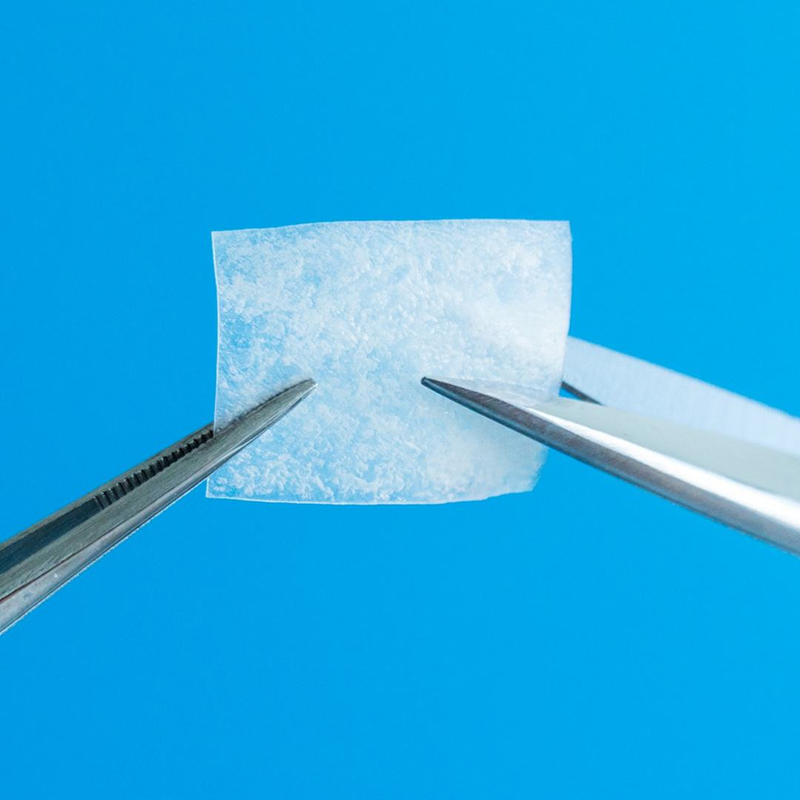
Conversely, a resorbable membrane eliminates the need for retrieval, degrading naturally within the tissues. A collagen-based resorbable membrane is highly favored for its exceptional biocompatibility, local hemostatic properties, and smooth biological integration.
The predictable degradation profile of a resorbable membrane—typically lasting from 4 to 24 weeks—allows clinicians to sequence implant placement or loading with accurate, data-driven timelines. Choosing the proper material based on defect morphology ensures that guided bone regeneration proceeds smoothly.
In horizontal ridge defects, a lack of buccal bone volume threatens primary implant stability and aesthetics. Here, a dental membrane acts as a tenting structure, preserving graft volume against overlying tissue pressure. Achieving predictable horizontal expansion has transformed previously untreatable cases into routine successes.
Vertical ridge augmentation presents an even greater clinical challenge. Gaining vertical bone height requires absolute space maintenance and tension-free flap closure. In these advanced cases, utilizing a durable resorbable membrane or a titanium-reinforced barrier stabilized by fixation pins ensures structural stability.
Mastering the use of a dental membrane during vertical expansion directly correlates with superior clinical outcomes. Protecting these complex sites significantly increases the likelihood of achieving sufficient bone volume, reducing treatment abandonment, and ensuring maximum implant predictability.
Simultaneous implant placement with guided bone regeneration is a highly efficient protocol when primary stability can be achieved despite minor localized bone deficiencies. In this approach, a resorbable membrane is adapted immediately around the exposed implant threads to shield the surrounding bone graft. This dual process of osseointegration and bone matrix formation requires a highly stable microenvironment.
This simultaneous approach reduces healing times and limits the patient to a single surgical intervention. However, efficiency must not compromise safety. A high-quality resorbable membrane ensures the barrier remains functional during the first 4 to 8 weeks, when soft tissue invasion risks are peak.
Clinical data confirms that when simultaneous guided bone regeneration is performed using an appropriate dental membrane, long-term implant survival rates match those placed in pristine native bone, validating the role of barriers in driving implant predictability.
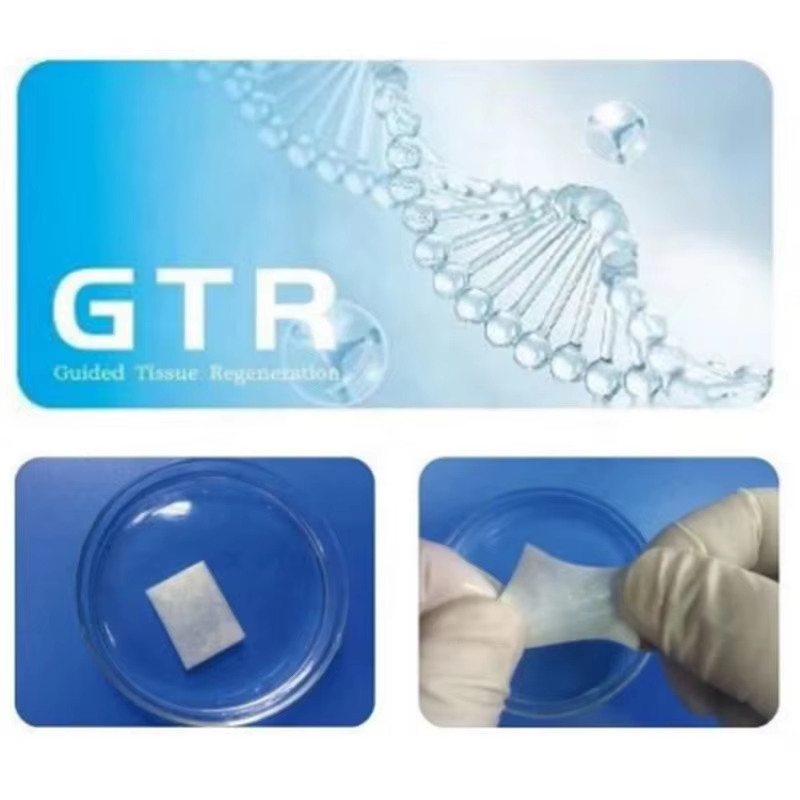
Not all barrier materials perform identically, and the final bone volume is highly dependent on specific material properties. Crucial parameters include tensile strength, pore structure, and the degradation rate of a resorbable membrane. A barrier lacking adequate structural stiffness may collapse under muscle forces, while a resorbable membrane that degrades too quickly exposes the consolidating graft prematurely to soft tissue infiltration.
To secure long-term implant predictability, the physical lifespan of the dental membrane must mirror the biological timeline of human bone formation. Advanced collagen resorbable membranes use controlled cross-linking to extend their functional duration, protecting the site throughout the critical early healing window. Clinicians must select products with verified resorption data to guarantee consistent guided bone regeneration.
Even an advanced resorbable membrane will fail if surgical handling is flawed. The dental membrane must extend at least 2 to 3 millimeters beyond the borders of the bone defect to completely seal the graft and prevent peripheral soft tissue ingrowth. Omitting this step creates a pathway for fibrous cells, directly lowering implant predictability.
Tension-free soft tissue closure over the dental membrane is equally vital. Flap tension causes wound dehiscence, exposing the dental membrane to the oral environment, causing bacterial colonization and rapid, premature resorption. Achieving a tension-free closure requires precise periosteal releasing incisions and careful flap design. Proper wound closure and precise placement are tightly linked; both must work in tandem to secure predictable guided bone regeneration.
The true measure of implant predictability extends far beyond initial healing into years of functional loading. Histological analysis reveals that bone matured under a dental membrane exhibits lamellar characteristics identical to native alveolar bone. This high-quality bone provides a dense, vascularized foundation that supports long-term osseointegration and proper stress distribution under mechanical load.
Long-term clinical trials tracking implants placed in sites reconstructed via guided bone regeneration show success rates matching those placed in unaugmented bone. This allows clinicians to discuss long-term prognoses with immense confidence. Furthermore, maintaining facial bone thickness through guided bone regeneration prevents future mucosal recession, preserving both structural stability and optimal peri-implant aesthetics over time.
A major advantage of using a dental membrane is the significant reduction in reoperation rates. When guided bone regeneration is properly integrated using a reliable resorbable membrane, the risk of finding inadequate bone volume during implant placement is drastically minimized. This high level of predictability eliminates the need for secondary corrective grafting, reducing patient morbidity, treatment delays, and unexpected clinical costs.
For growing dental practices, minimizing complications and reoperations is essential for efficient management. Predictable outcomes optimize scheduling, lower overhead costs, and build a strong professional reputation for managing complex cases. Utilizing a high-quality dental membrane during guided bone regeneration is a vital investment in clinical precision and predictable patient care.
Is a dental membrane necessary for all implant procedures?
No, a dental membrane is not required for every single case. If a patient presents with abundant native bone and an ideal ridge architecture, standard implant placement can proceed without bone augmentation. However, whenever horizontal or vertical bone deficiencies are present, or when simultaneous grafting is performed, a dental membrane is essential to protect the graft and ensure high implant predictability.
How long does a resorbable dental membrane typically last before degrading?
The exact timeline depends on the cross-linking technology of the specific product. Standard non-cross-linked collagen resorbable membranes usually dissolve within 4 to 8 weeks, whereas highly cross-linked variations maintain their barrier integrity for up to 6 months. Clinicians must select a resorbable membrane with a lifespan that perfectly matches the biological healing rate required for the specific bone defect.
Can a dental membrane be used with all types of bone graft materials?
Yes, a dental membrane functions perfectly with autogenous bone, allografts, xenografts, and synthetic biomaterials. The membrane acts as an external protective envelope regardless of the underlying graft matrix. Certain collagen resorbable membranes integrate exceptionally well with bovine-derived xenografts due to their shared biological origin, accelerating local tissue healing.
What signs indicate that a dental membrane has functioned successfully?
Successful membrane function is confirmed during re-entry or radiographic analysis. Clinically, the presence of hard, well-vascularized bone tissue beneath the surgical site—rather than soft, rubbery fibrous tissue—indicates successful guided bone regeneration. Radiographically, increased radiopacity and maintained ridge width confirm that the dental membrane effectively protected the graft throughout the vital healing window.

 EN
EN