Modern dentistry depends on a sophisticated ecosystem of advanced clinical equipment. At the center of every operatory, diverse dental machines work together to deliver accurate, safe, and highly efficient care. The selection of the right dental machines directly impacts patient satisfaction, surgical success, and long-term practice profitability.
As technology has evolved from manual, air-driven instruments to integrated digital platforms, the selection of dental machines in daily use has expanded. This article examines the most prevalent dental machines used today, exploring their specific functions and why they remain indispensable in professional practice.
The dental unit is the foundational platform found in every single operatory. This vital machine integrates the patient chair, irrigation delivery system, surgical lighting, suction lines, and connections for critical handpiece tools into one structural platform. Every patient treatment begins and ends at this central station.
Modern dental unit designs have evolved to incorporate touch-screen digital controls, programmable chair positioning, and seamless compatibility with auxiliary devices. Choosing a high-quality dental unit reduces physical fatigue for the clinician during long restorative treatments and optimizes patient comfort.
For growing clinics investing in premium equipment, the dental unit represents a long-term capital asset. When evaluating core dental machines, selecting a durable dental unit ensures smooth multi-procedural workflows and simplifies routine maintenance protocols.
A defining feature of the modern dental unit is its capacity to combine with auxiliary dental machines. Treatment systems can seamlessly interface with intraoral cameras, diagnostic monitors, and the implant motor. Centralizing control surfaces directly onto the main dental unit eliminates operatory clutter and organizes cable management.
Furthermore, a contemporary dental unit frequently includes chairside multimedia displays. Sharing real-time digital impressions or radiographs with patients at the dental unit enhances case acceptance, turning the dental unit from a simple chair into a powerful patient education platform.
The dental handpiece is the most frequently handled tool among all clinical dental machines. It exists in two primary mechanical forms: high-speed and low-speed units. The high-speed dental handpiece, often spinning above 200,000 RPM, is the workhorse of daily restorative care. Clinicians utilize this precise dental handpiece for efficient enamel removal, shaping crown preparations, and clearing decay.
Electric motor advancements have significantly boosted the performance of the traditional dental handpiece. An electric dental handpiece maintains constant cutting torque even under heavy physical resistance, reducing unpleasant tooth vibration. Incorporating a well-balanced dental handpiece ensures smooth adjustments during intricate cosmetic workflows.
The low-speed dental handpiece operates at reduced rotation speeds and satisfies alternative clinical needs. This style of dental handpiece is routinely selected for finishing composite materials, polishing enamel surfaces, and adjusting prosthetics chairside. Because it delivers highly controlled rotation, the low-speed dental handpiece safely clears soft carious dentin near the pulp.
Many dental handpiece systems allow fast switching between straight and contra-angle attachments. Maintaining a diverse dental handpiece inventory ensures that the clinic can easily transition from restorative preparations to standard prophylaxis without needing separate standalone dental machines.
As implantology continues to grow rapidly, the implant motor has become a critical surgical dental machine. The implant motor manages the precise rotation speeds and critical torque thresholds required to prepare osteotomies and insert fixtures safely. Achieving this level of precision requires a specialized implant motor that far exceeds the capabilities of standard restorative dental machines.
Advanced dental machines often feature a brushless implant motor integrated with an interactive touchscreen panel. Incorporating brushless technology within the implant motor extends equipment longevity, minimizes ambient friction heat, and stabilizes power output during long bone augmentations. For clinics expanding into surgical placements, a premium implant motor is a vital asset for maintaining clinical safety.
Precise torque control is the essential feature that separates a dedicated implant motor from general-purpose cutting equipment. Excessive torque during placement can generate friction-induced bone necrosis or microfractures. Therefore, the built-in safety parameters of a modern implant motor protect bone viability and support osseointegration.
State-of-the-art implant motor systems utilize intelligent data feedback, automatic reverse mechanisms, and bright LED illumination. These automated functions minimize operator technique variability, ensuring every drilling sequence adheres to manufacturing specifications. Investing in a reliable implant motor reduces surgical risks and guarantees predictable restorative outcomes.
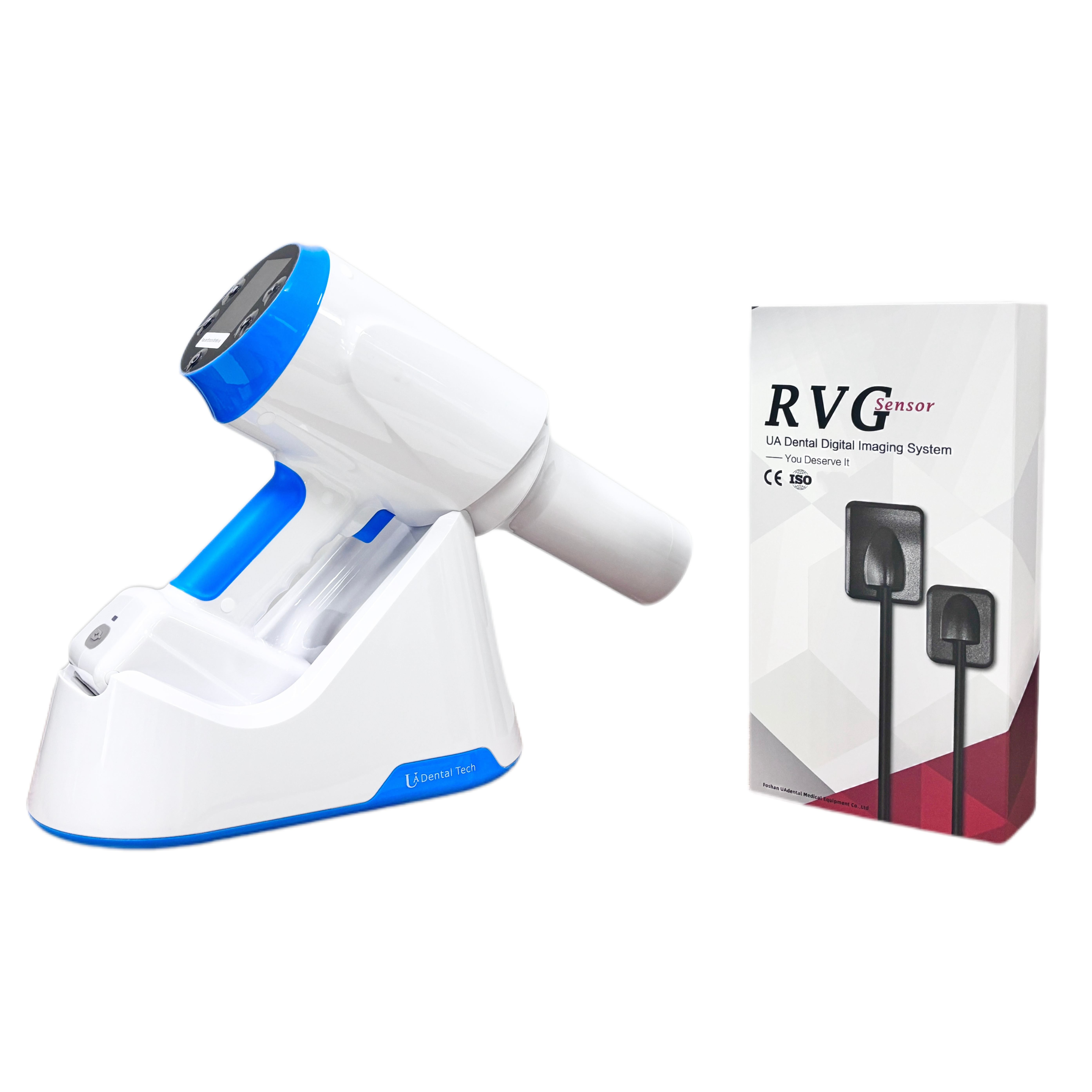
Digital radiography has systematically replaced traditional chemical film, positioning the digital X-ray system among the most widely used diagnostic dental machines. A modern digital X-ray system captures intraoral architecture with minimal radiation exposure, displaying high-resolution images instantly on chairside monitors.
The diagnostic utility of a digital X-ray system benefits every dental discipline. General dentists use the digital X-ray system to identify interproximal caries, while specialists depend on it to monitor endodontic treatments. For advanced surgical planning, cone beam computed tomography (CBCT) expands the capability of a standard digital X-ray system by generating detailed three-dimensional volumetric bone measurements.
Clinicians understand that the clarity of their primary digital X-ray system directly impacts diagnostic precision. Investing in an advanced digital X-ray system allows dental teams to locate deep pathology quickly and explain treatment strategies to patients with total clarity.
The intraoral scanner has emerged as a mainstream diagnostic dental machine across restorative and orthodontic practices. By capturing optical impressions of the dentition, these dental machines eliminate messy traditional impression trays. This technology integrates smoothly into CAD/CAM workflows, sending files directly to laboratory milling systems. The speed of these modern dental machines elevates patient comfort and reduces turnaround time for final crown fabrication.
No collection of clinical dental machines is complete without reviewing sterilization equipment, with the autoclave representing the most heavily regulated machine in the facility. The autoclave employs pressurized steam to destroy microbial life on reusable tools, serving as a critical pillar of infection control.
Public health guidelines require strict verification of sterilization cycles, making the autoclave an essential dental machine for everyday compliance. Modern autoclaves feature vacuum-assisted drying cycles and automated digital data logging. Maintaining reliable sterilization dental machines protects patient health and ensures the facility adheres to strict local healthcare audits.
Prior to placing items in an autoclave, ultrasonic cleaners are used to remove loose bioburden through high-frequency acoustic agitation. This supporting dental machine cleans hard-to-reach hinged joints, preparing tools for sterilization. Incorporating ultrasonic dental machines into the decontamination room accelerates reprocessing speeds and extends the service life of delicate surgical instruments.
What is the most frequently utilized dental machine in a general practice? The dental unit remains the primary foundational platform because it unifies the chair, suction, and delivery networks. However, the dental handpiece is the most frequently handled tool on a daily basis. Together, the central dental unit and the attached dental handpiece form the core treatment setup of every modern operatory.
Why must a clinic use a specialized implant motor instead of standard equipment? A dedicated implant motor provides exact torque limiting and low-speed calibration necessary for safe bone preparation. Standard restorative dental machines lack the torque control needed to place fixtures without risking bone necrosis. Utilizing a programmable implant motor ensures that procedures follow safe biological limits.
How does a digital X-ray system improve clinic workflows compared to older technology? An advanced digital X-ray system eliminates manual chemical processing, rendering sharp diagnostic data on monitors in seconds. A digital X-ray system exposes patients to far lower radiation dosages while simplifying record storage. The immediate visualization provided by a digital X-ray system shortens appointment lengths.
Are sterilization dental machines subject to official compliance audits? Yes, autoclaves and supporting sterilization dental machines are heavily monitored by regional healthcare authorities. Practices must prove that their sterilization dental machines reach appropriate temperatures and pressures regularly. Modern autoclaves feature automatic logging to make this daily compliance reporting simple and verifiable.

 EN
EN