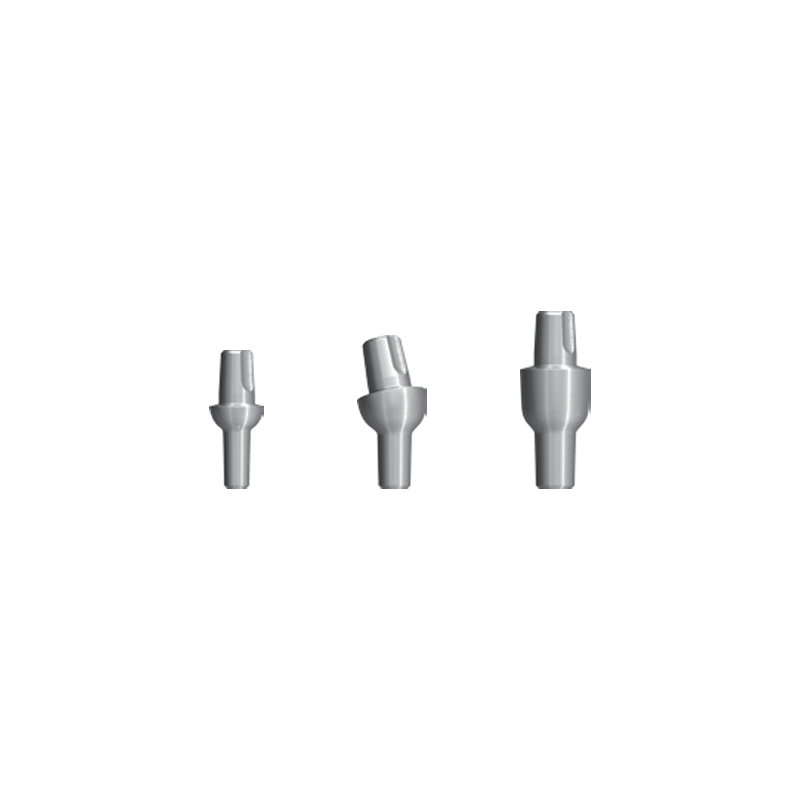
straight abutment
A straight abutment is a fundamental dental implant component designed to connect an implant fixture to the prosthetic crown or bridge restoration. This precision-engineered component serves as the critical interface between the subgingival implant body and the visible dental restoration, making it essential for achieving optimal esthetic and functional outcomes.
The straight abutment functions as a connector that transfers masticatory forces from the crown to the implant fixture while maintaining proper alignment and stability. Its primary role involves supporting the final restoration while ensuring accurate positioning relative to adjacent teeth and tissues. The straight abutment design features a uniform cylindrical body that extends from the implant platform to the preparation shoulder, providing straightforward installation and predictable clinical results.
Technologically, a straight abutment incorporates precision-milled surfaces and standardized dimensions that ensure compatibility with most implant systems. Modern straight abutment designs utilize biocompatible materials such as titanium or zirconia, which resist corrosion and integrate seamlessly with surrounding tissues. The abutment's geometric configuration promotes optimal load distribution, reducing stress concentration that could compromise implant longevity.
Applications for the straight abutment include single-tooth implant restorations, anterior and posterior regions, and cases requiring simple, uncomplicated implant-supported prosthetics. Dental professionals favor the straight abutment for straightforward clinical situations where implant positioning allows direct crown placement without angular correction. Its versatility extends to both cemented and screw-retained restoration protocols, making the straight abutment an indispensable choice in contemporary implant dentistry for practitioners seeking reliable, predictable outcomes.


 EN


